Our matcha.
Hagimura Seicha, Suizawa · MatchaBa, Vienna
The matcha we whisk at MatchaBa grows in Suizawa, at the foot of the Suzuka mountains in Mie, Japan. Hagimura Seicha grows it in the shade and grinds it on stone; through our sister project AB Matcha it comes straight to us.
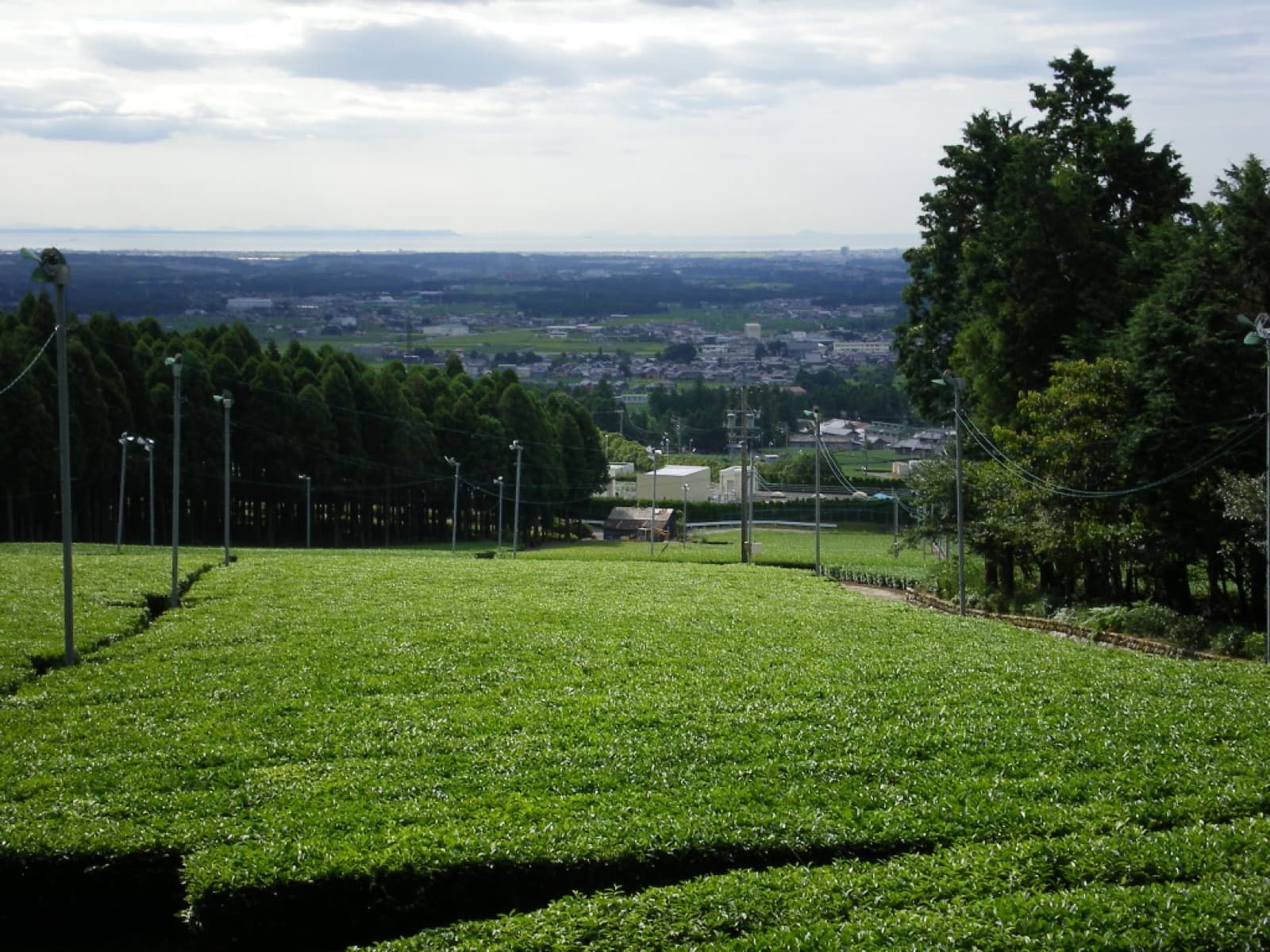
- Mie, JapanSuizawa, at the foot of the Suzuka mountains
- 170+ yearsof kabusecha in Suizawa: tea grown in the shade
- 12 stone millsgrind the tencha into matcha
- Imported directthrough our sister project AB Matcha
From leaf to cup.
With matcha you drink the whole leaf, finely ground. Getting there takes one step after another.
13tencha lines, the most in Japan by the company's own count
- 覆
Shade
A few weeks before the harvest the bushes go under cover.
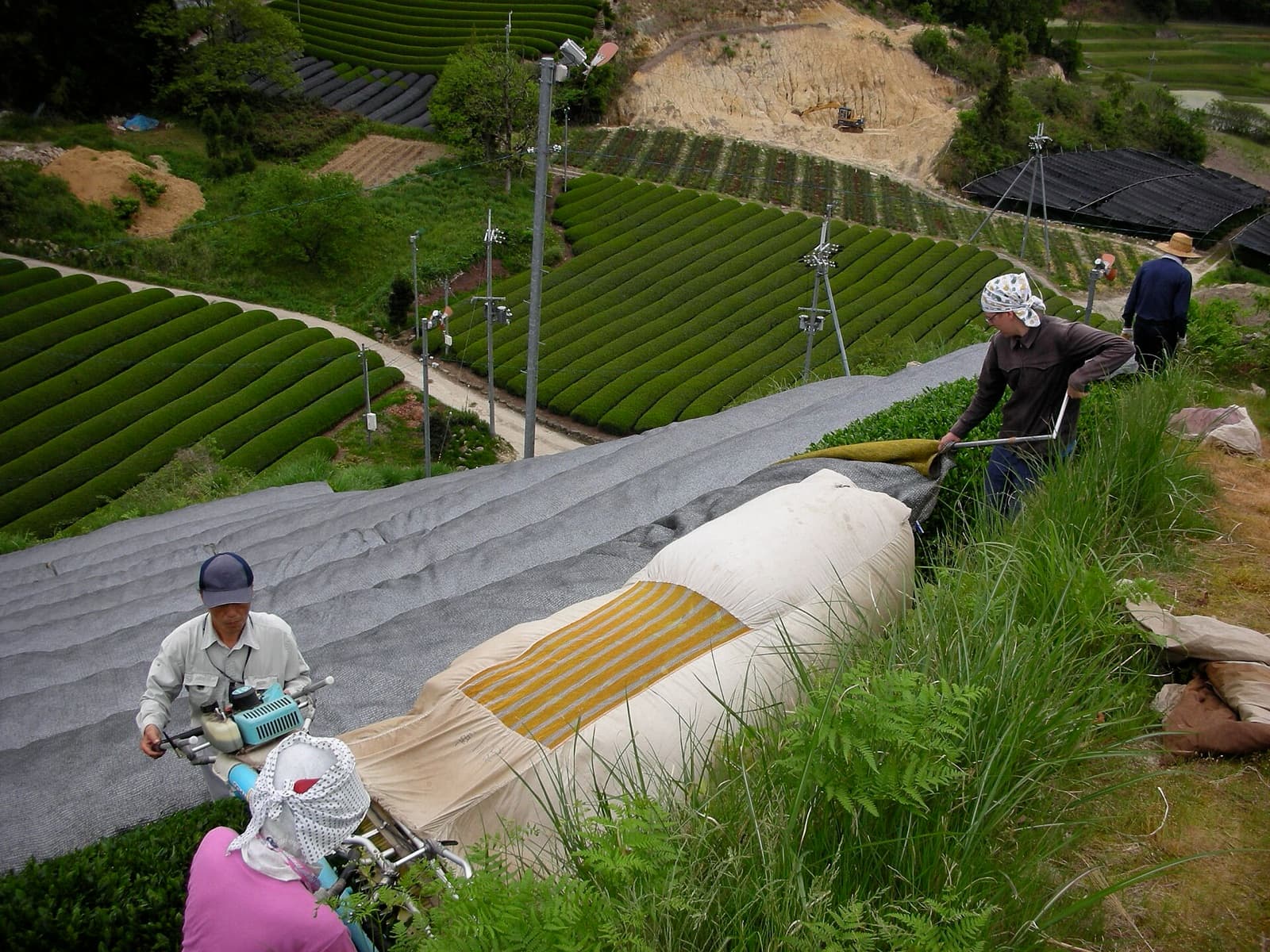
The cover comes off and the kabuse harvest begins. - 摘
Pick
For the finest grades the young leaves are carefully picked by hand.
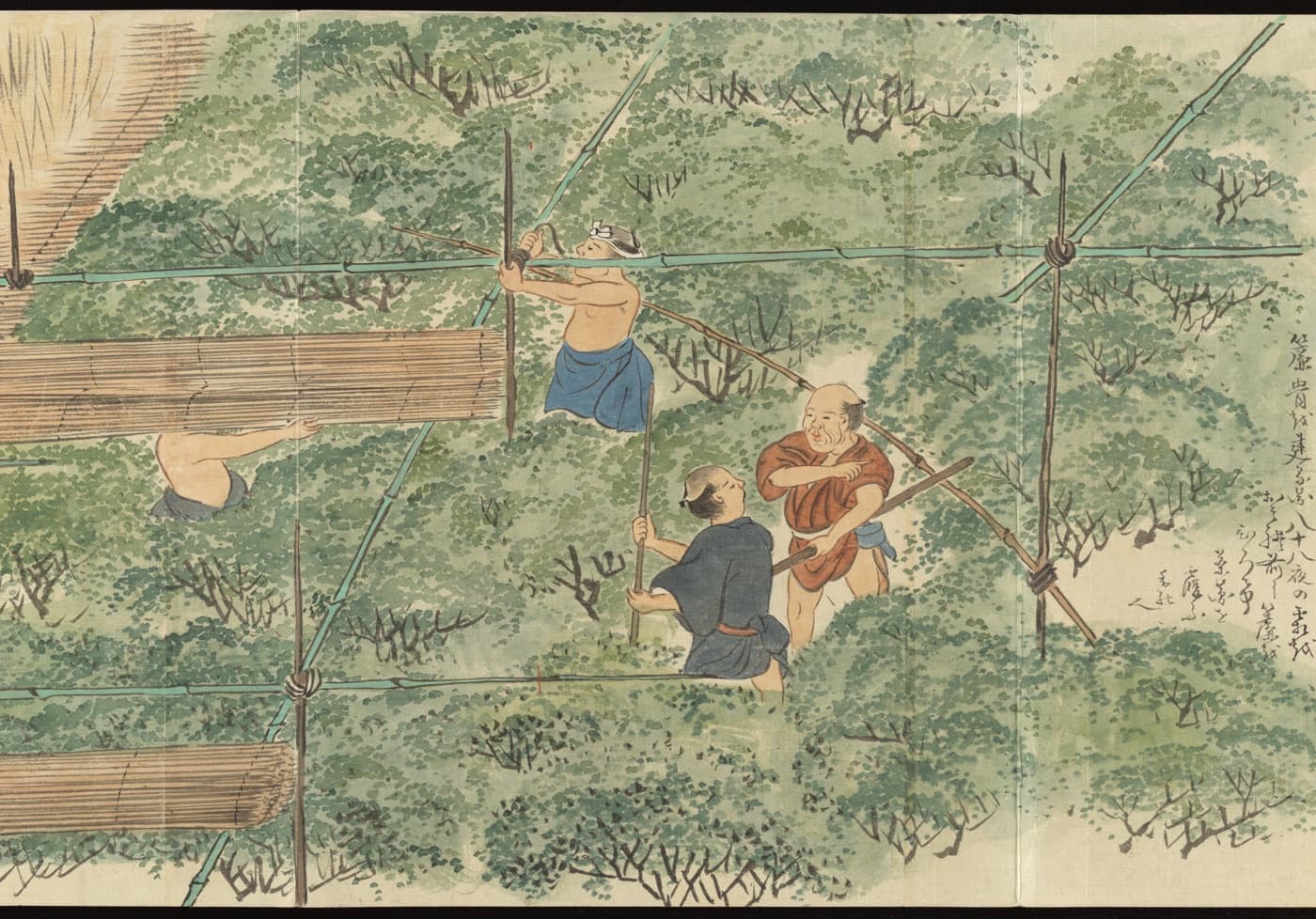
Picking in Uji. Saitō Motonari, 1803 (detail). - 蒸
Steam
The fresh leaves are steamed.
- 炉
Dry
Then they dry in the tencha oven without being rolled. Hagimura Seicha builds its ovens on the model of the traditional brick oven.
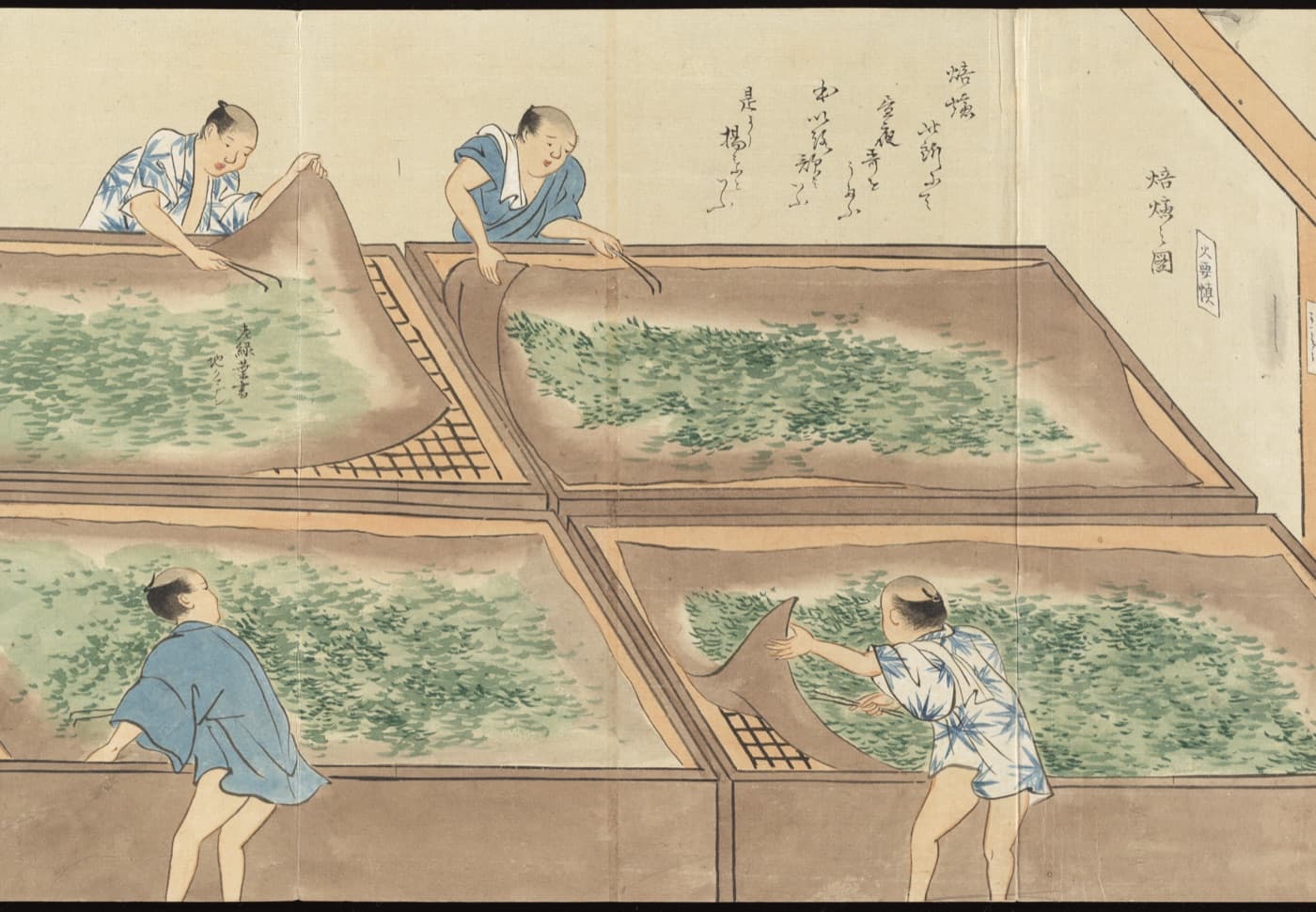
Drying over the oven in Uji. Saitō Motonari, 1803 (detail). - 選
Sort
Stems and veins come out. What is left is tencha.
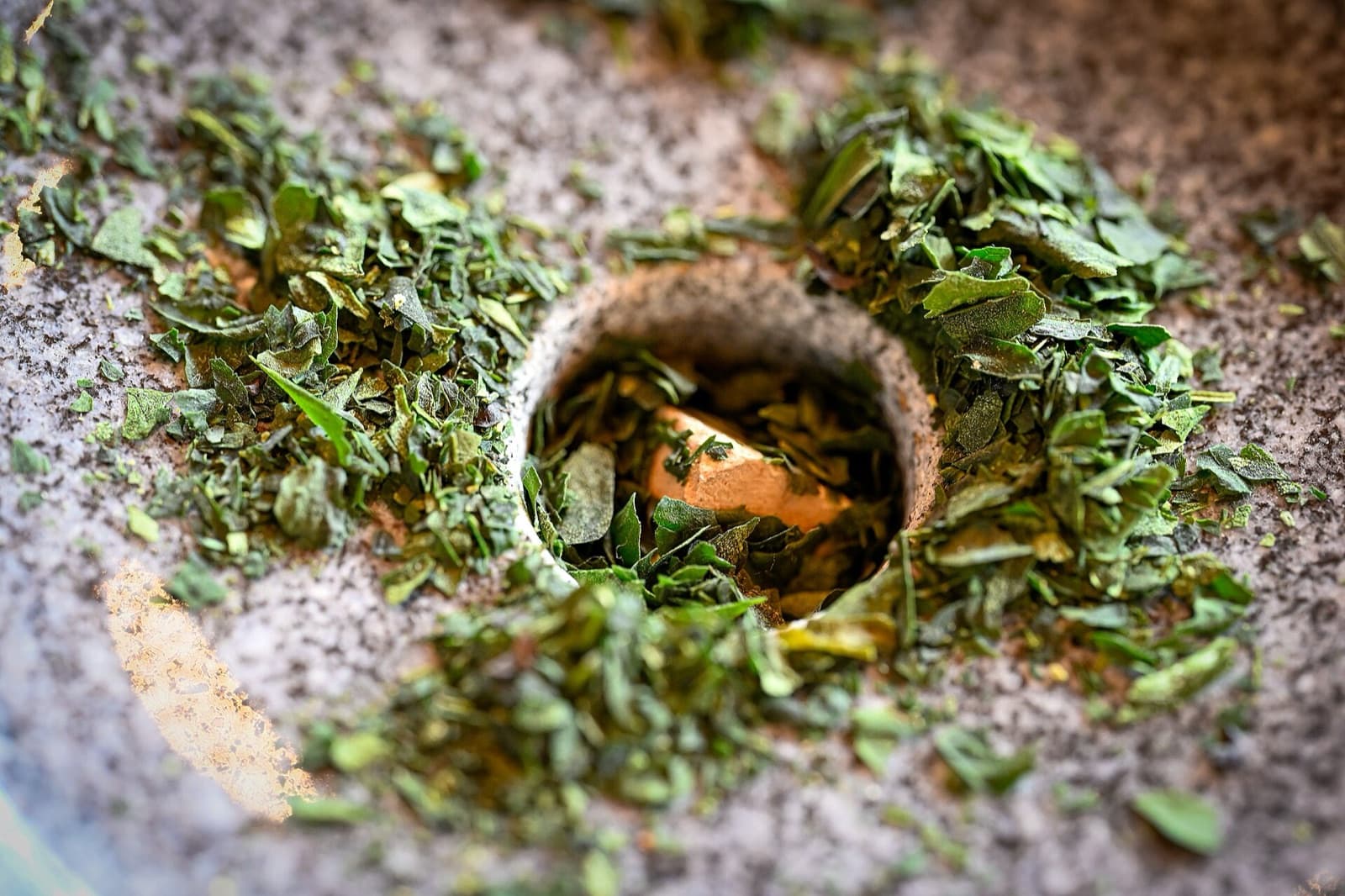
Tencha on a stone mill in Uji, Kyoto. - 臼
Grind
Stone mills grind the tencha into fine powder. Hagimura Seicha runs twelve of them.
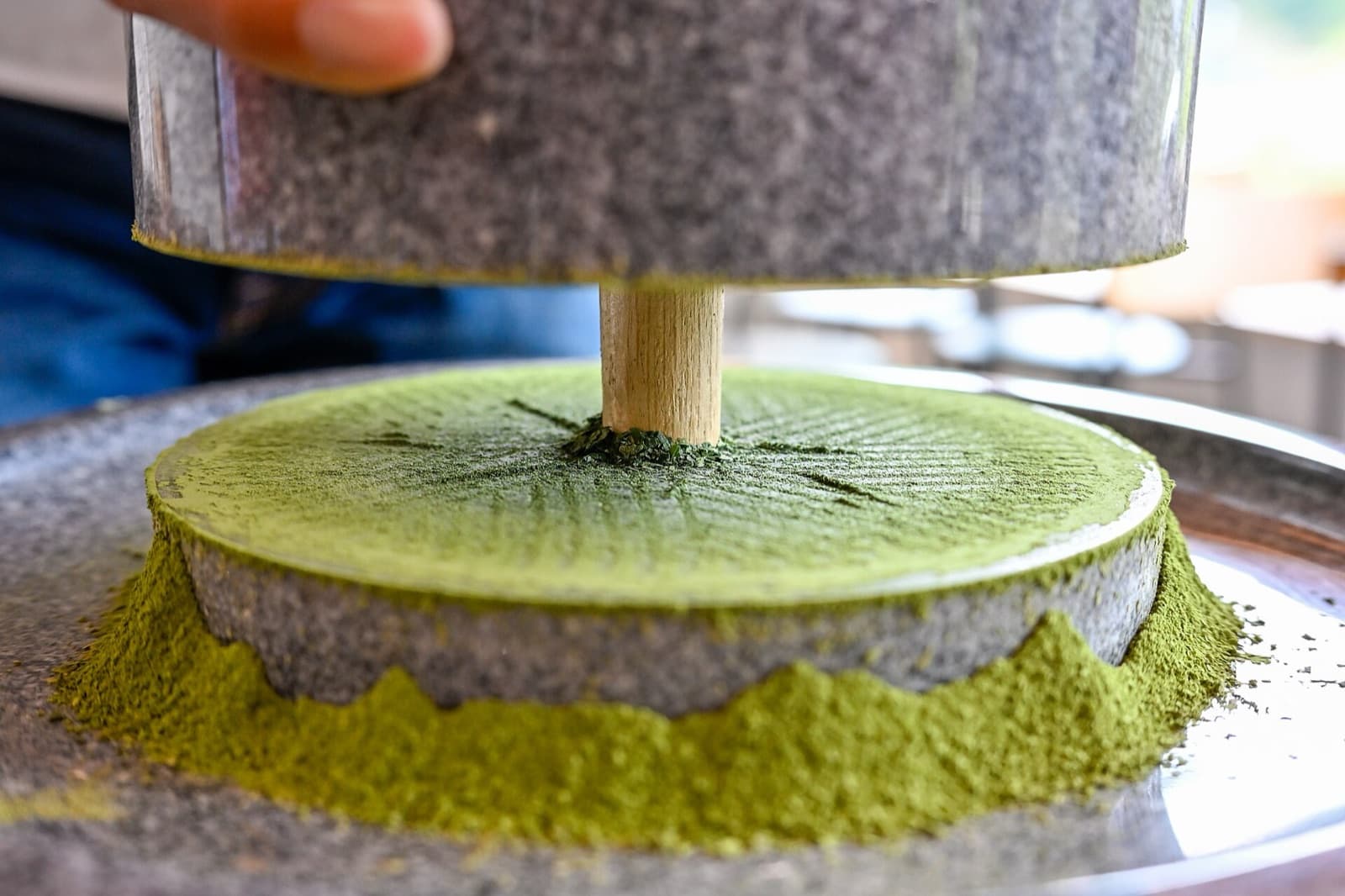
Matcha coming out of a stone mill. Uji, Kyoto. - 届
Import
Through our sister project AB Matcha it comes straight to Vienna.
- 点
Whisk
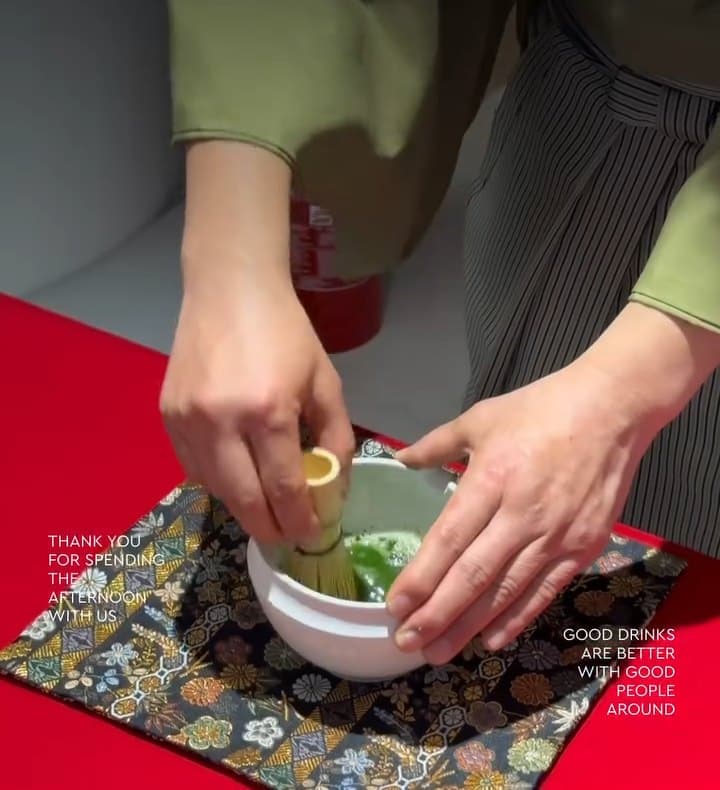
On Otto-Bauer-Gasse: with a bamboo whisk, bowl by bowl, right before your eyes. Hagimura-san recommends water at 75 to 80 °C.
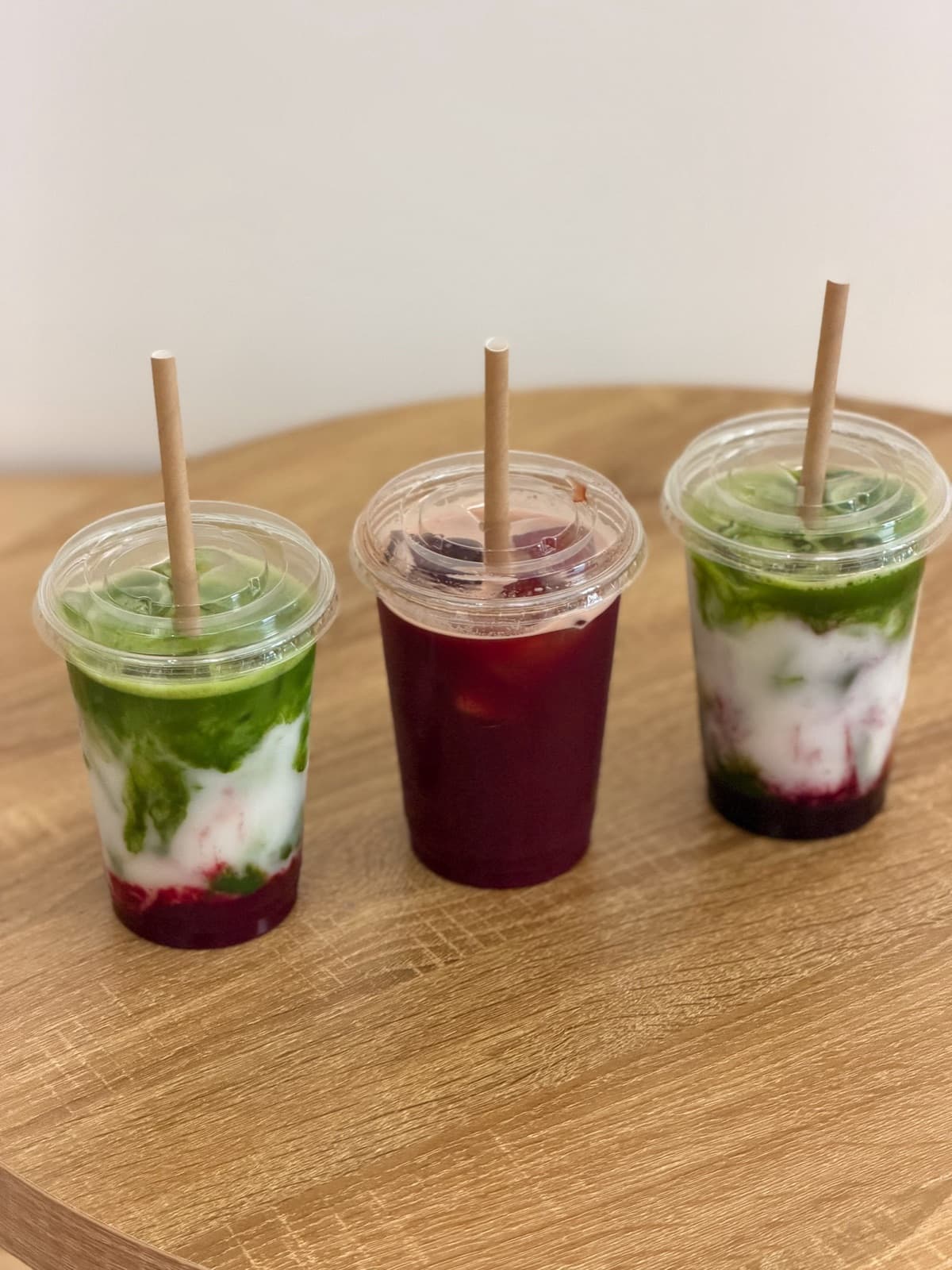
Matcha drinks at MatchaBa.
The grower: Hagimura-san.
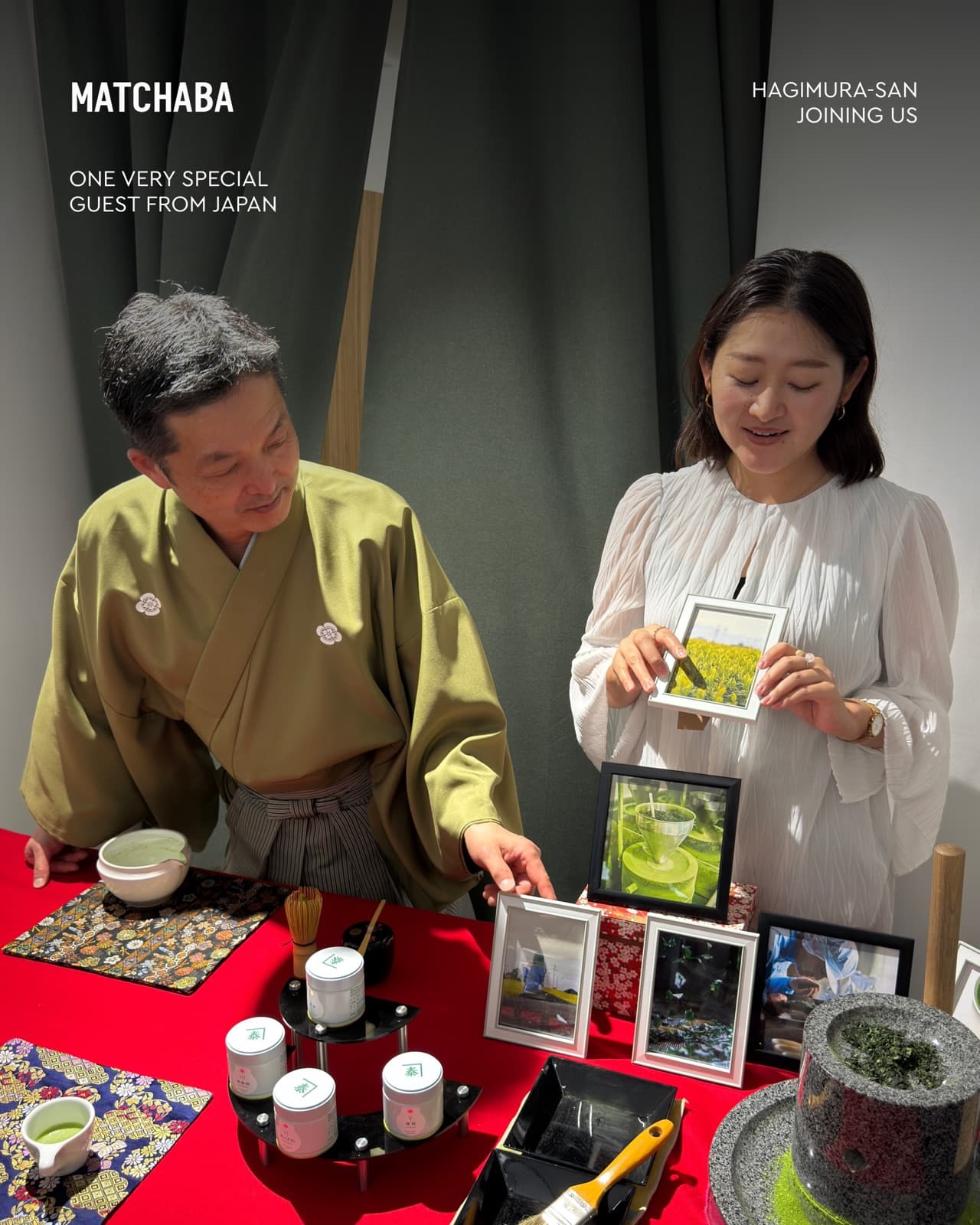
Koshi Hagimura runs Hagimura Seicha in Suizawa: 3.5 hectares of tea in 1962, 135 hectares today. He grows tea, turns it into matcha and, as a shihan of the Enshū school, teaches the tea ceremony.
一椀のため、一人のために
For one bowl. For one person.
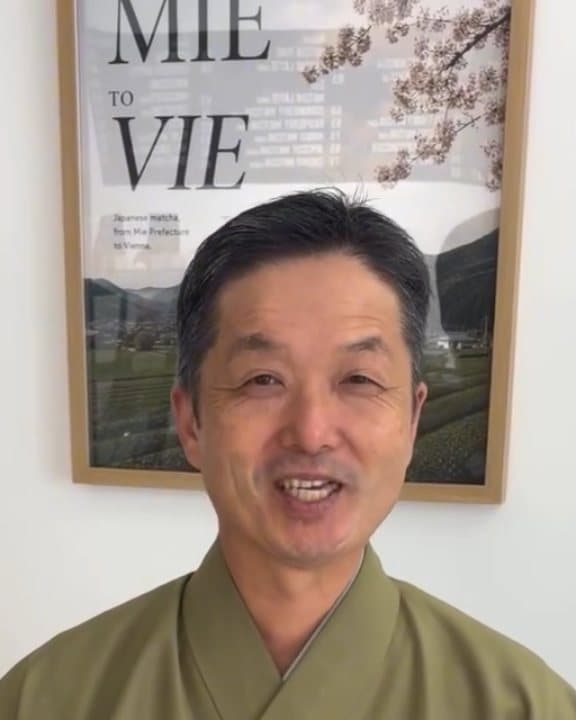
Mie to Vie.
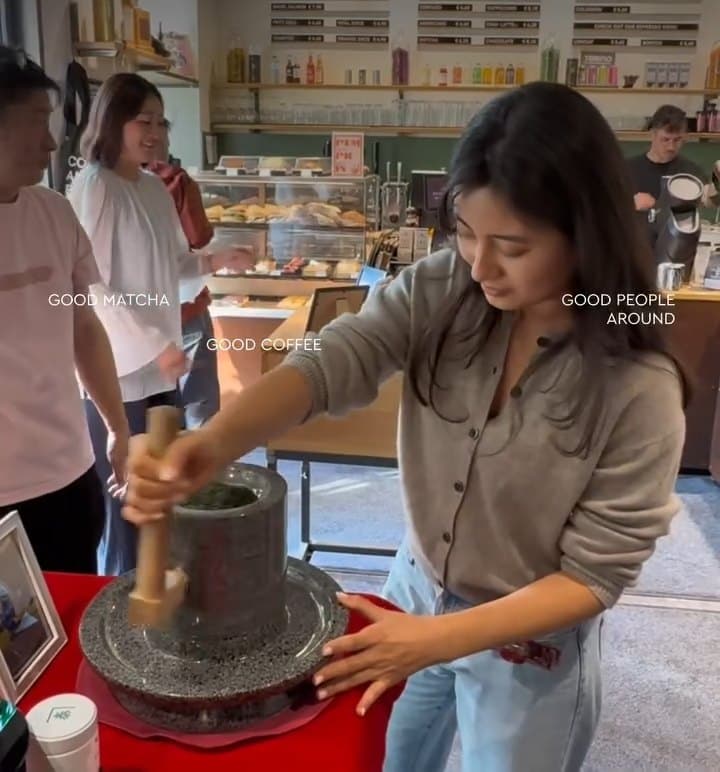
On 2 October 2026 Hagimura-san came to Vienna for MatchaBa's workshop. He whisked matcha with hot water and a bamboo whisk and showed how the bowl is passed: front towards the guest, who turns it a little before the first sip. Whoever drinks before the others says “Osaki ni”.
He welcomes matcha being mixed with milk or made into ice cream:
“We are glad when a matcha latte makes people ask: what is real tea, actually?”
一服どうぞ
In your cup.
We source our matcha directly from Hagimura Seicha in Suizawa. Try it pure or as a latte at Otto-Bauer-Gasse 4.
- Matcha Pure€ 5.50
- Matcha Latte€ 6.00
- Iced Matcha Latte€ 6.50
- Matcha Coconut Water€ 6.50
Ippuku dōzo: have a bowl of tea.
Sources
Pictures and lettering
- Utagawa Hiroshige, Yokkaichi (around 1841): public domain, via Wikimedia Commons
- Saitō Motonari, Illustrations of Uji Tea Production (1803): The Metropolitan Museum of Art, public domain
- Suzuka mountains: Alpsdake, CC BY-SA 4.0
- Tea fields in Suizawa: H Okano, CC BY 3.0
- Kabuse harvest: Aaron Armstrong, CC BY-SA 4.0
- Tencha on the stone mill: Derjochenmeyer, CC BY-SA 4.0
- Matcha from the stone mill: Derjochenmeyer, CC BY-SA 4.0
- Hagimura-san and the Vienna workshop: @matchaba_at
- Matcha drinks at MatchaBa: @matchaba_at
- Stroke order of the Japanese characters: KanjiVG, CC BY-SA 3.0